3D Strong Advances Composite Processing and Specimen Preparation for Further Testing
As part of the development work within the EnergySkin project, partner 3D Strong Ltd continues experimental processing of functional polymer composite materials and preparation of test specimens for further characterization.
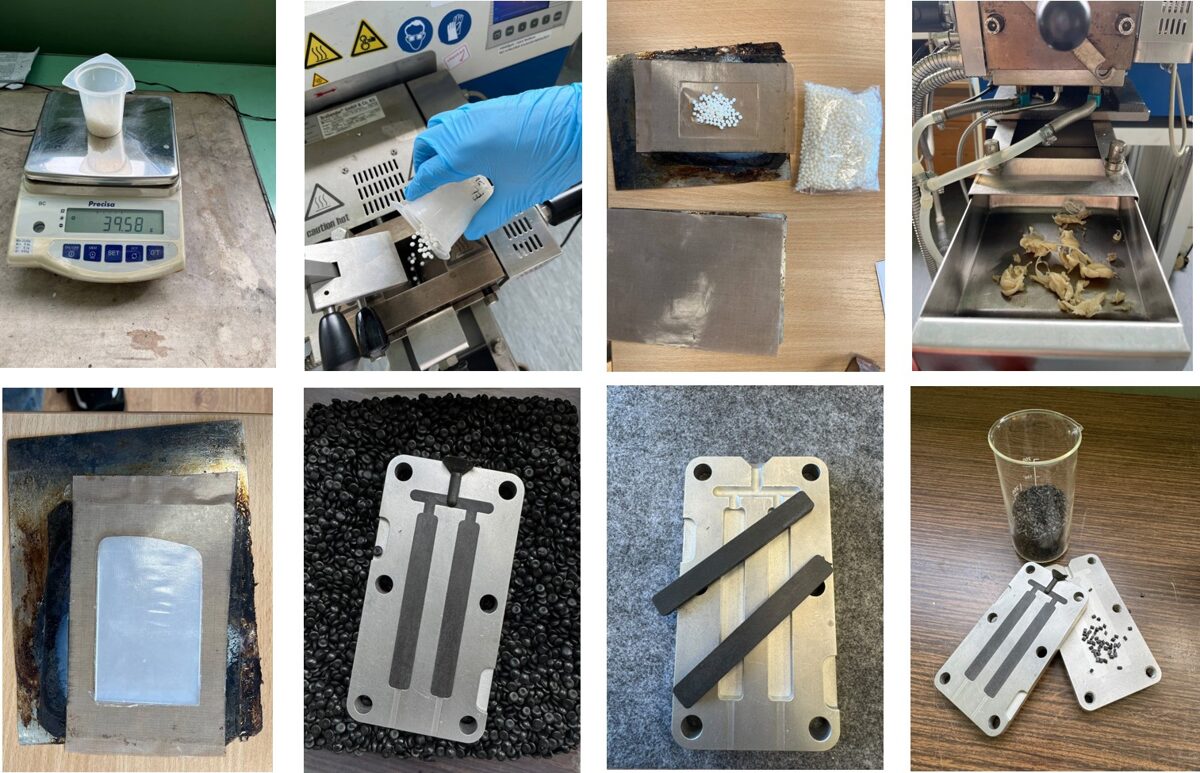
The new set of laboratory photos documents several key stages of the material-development workflow — from raw polymer feedstock and weighing to melt processing, granule preparation and specimen formation.
The work supports the development of polymer-based materials intended for future structural and electrically functional components of the EnergySkin system.
From raw material to test samples
The experimental process begins with preparation and dosing of the selected polymer feedstock. In the current testing stage, polymer pellets are weighed and introduced into laboratory processing equipment for controlled melt compounding.
After formulation and mixing, the materials are processed into composite granules suitable for further manufacturing steps and evaluation. The resulting material is then used to prepare elongated bar-shaped specimens, which are suitable for further laboratory testing and comparison.
These specimens make it possible to evaluate how material composition and processing conditions affect the final quality and performance of the developed composites.
Supporting further characterization
The prepared samples will be used in the next stages of laboratory work, including evaluation of:
- material processability
- specimen quality and uniformity
- mechanical behaviour
- thermal performance
- electrical functionality, where relevant
This step is important because the EnergySkin concept requires materials that are not only functional, but also sufficiently stable and manufacturable for integration into future prototype components.
Why this work matters
Within the project, 3D Strong contributes to the development of advanced polymer composite materials for additive manufacturing and functional system integration.
The preparation of reproducible laboratory specimens is a necessary step toward identifying the most promising material formulations for future EnergySkin prototype development.
This work helps bridge the gap between material formulation and practical component manufacturing, supporting the long-term goal of creating multifunctional building-envelope systems that combine insulation, energy generation and energy storage.